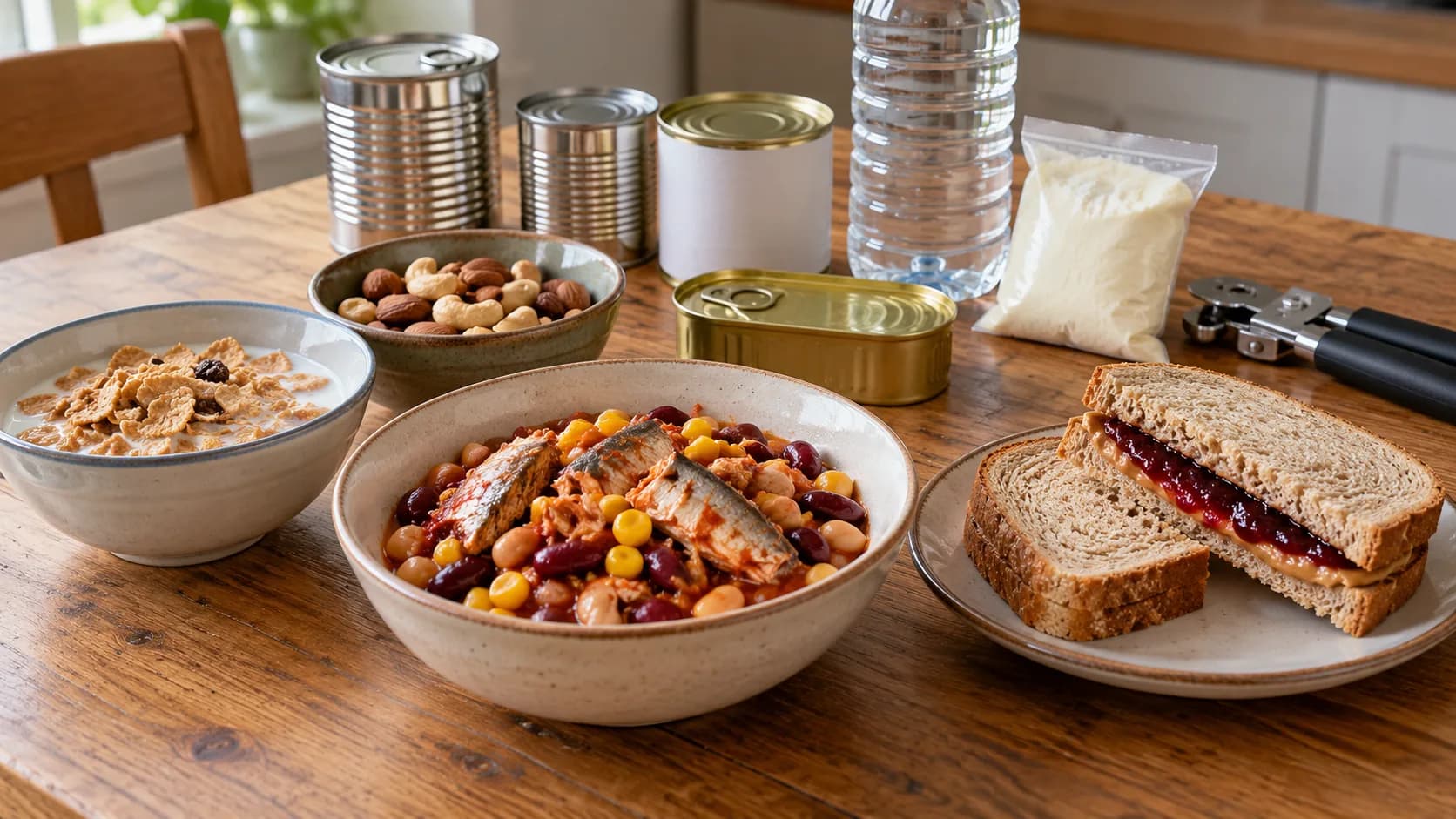
A cupboard full of food can still leave you wondering what to eat when the power goes out. Rice needs cooking. Your usual breakfast might depend on refrigerated milk. A large tin could leave you with leftovers you cannot keep cold.
Planning a few meals in advance helps you spot those problems before you need the food. You can build a useful reserve from ordinary groceries, choosing products your household already enjoys.
For this guide, we are planning for the worst cooking situation: no electricity, no usable gas supply and no safe way to cook off-grid. There is no barbecue or camping stove available, and you cannot boil water.
Everything you eat will be at room temperature. Some meals will be less appealing than their usual hot versions, but a little planning can keep you fed through a short disruption. If you have more options, adapt the menu to use them.
Use food from the fridge while it is still safe
Your refrigerated food does not spoil the moment the electricity goes off. Before opening your emergency supplies, consider what you already have that can be eaten without cooking.
Tomatoes, salad and cheese could improve a sandwich or accompany canned fish. Use refrigerated foods that are still safe before turning to supplies that can stay in the cupboard.
Keep the fridge and freezer doors closed as much as possible. An unopened fridge generally keeps food cold for about four hours, but this is an estimate. Starting temperature, room temperature and how often the door opens all matter.
Use a fridge thermometer and follow your local food-safety authority's time and temperature guidance. Do not eat food that has become unsafe simply to avoid wasting it. Smelling or tasting it cannot reliably establish safety.
Raw food that still needs cooking will not help if you have no safe way to prepare it.
Build meals around what you can actually prepare
Breakfast
Cereal with powdered milk is a straightforward option. Choose a powder suitable for mixing with cold drinking water and follow its preparation instructions. Make only what you will use immediately.
Diluted condensed milk is another option if you like a sweeter breakfast. Remember that sweetened condensed milk contains substantial added sugar and is not nutritionally equivalent to ordinary milk. Small portions are more practical than opening a large can you cannot refrigerate.
Keep enough safe water for mixing milk as well as drinking. Neither powdered milk nor protein powder makes unsafe water safe.
Lunch
Baked beans on bread are an easy meal. They will be cold, and the bread will not be toasted unless you have a way to heat it. Choose canned beans suitable for eating without further cooking.
For another lunch, mix canned chickpeas with tuna or salmon. Add any suitable salad ingredients while they remain safe to eat. Bread or crackers can make the meal more substantial.
Choose commercially canned, ready-to-eat products and check the instructions. Do not assume every pouch or canned meal can be eaten without heating.
Dinner
Mixed beans with sweetcorn and sardines in tomato sauce make a simple meal from cupboard ingredients. The sauce gives the mixture some flavour without needing a separate dressing.
If you prefer a sandwich, peanut butter and jelly or jam is a useful alternative. Choose peanut butter whose storage instructions allow it to stay out of the fridge after opening. Single-serving jam pots, like those used in hotels, avoid leaving an opened jar that needs refrigeration.
Honey can replace the jam. It keeps well when stored properly and does not need refrigeration.
Other ready-to-eat canned meats can provide variety and additional protein. Try your chosen products cold before relying on them.
Snacks and extra protein
Mixed nuts are convenient, provided nobody eating them has a relevant allergy. Cereal bars can add energy between meals, while protein bars may help you meet your protein needs. Check the labels because the amounts vary considerably.
A protein powder that mixes with water can also be useful. Choose one you already tolerate, include the necessary drinking water and keep a shaker or suitable mixing container available. Drink it promptly after preparation and clean the container.
Protein powder can supplement your meals, but it does not automatically provide everything a meal would.
Put the options into a three-day plan
Here is one way to arrange them. Adjust portions to your household rather than treating each entry as a fixed serving.
Day 1
- Breakfast: cereal with freshly mixed powdered milk.
- Lunch: cold baked beans on bread, with suitable fridge contents while still safe.
- Dinner: mixed beans, sweetcorn and sardines in tomato sauce.
Day 2
- Breakfast: cereal with milk prepared from your chosen shelf-stable product.
- Lunch: chickpeas with canned tuna, accompanied by bread or crackers.
- Dinner: peanut butter and jam or honey sandwiches, with a protein shake if needed.
Day 3
- Breakfast: cereal with freshly mixed powdered milk.
- Lunch: chickpeas with canned salmon.
- Dinner: mixed beans and sweetcorn with ready-to-eat canned meat, or a suitable plant-based alternative.
Include snacks when planning each day's food. Add fruit or other foods your household enjoys, choosing products that fit the same storage and preparation limits.
Bread has a shorter storage life than most canned foods. Follow its storage instructions, check it before use and keep crackers or another suitable alternative in your reserve.
Check that the quantities are enough
Writing “cereal for breakfast” does not tell you how much to buy. Measure the portion you actually eat, then work out what your household needs across the plan.
Read the nutrition labels for those portions. Check total energy as well as protein, carbohydrate and fat. A menu can contain plenty of protein and still provide too little food overall.
The USDA's DRI Calculator estimates daily calorie needs and recommended macronutrient intakes from personal details and activity level. It provides planning targets rather than analysing your menu. Compare those estimates with the totals from your chosen products, allowing for individual requirements.
Vegans and vegetarians should take particular care when replacing the fish, meat and dairy in this example. Plan suitable alternatives that provide enough energy and protein, including fortified products where appropriate. People with allergies or medically prescribed diets need supplies that fit their existing dietary advice.
Choose packs you can finish
A large can is not always the most useful purchase. Once opened, many canned foods need refrigeration, as do prepared milk and other mixed drinks.
Choose pack sizes your household can finish at one sitting. Two people may share a can that would leave someone living alone with unusable leftovers. Check drained weights when calculating how much food a can provides.
Keep a manual can opener with your supplies. Allow safe water for washing hands and cleaning utensils, alongside your drinking and food-preparation needs. Our emergency water storage guide explains how to plan and maintain your reserve.
Being able to boil water changes the menu
Even a basic, safe way to boil water gives you far more choice. Instant coffee becomes possible, along with camping meals designed for rehydration and noodles whose instructions allow preparation with boiling water alone.
Instant couscous can turn canned fish or beans into a more satisfying meal. Some other instant grain products work similarly, but check the packet. Ordinary rice and dried beans cannot simply be soaked in hot water and treated as cooked.
Account for the water each product requires and follow its standing time or cooking instructions. Use barbecues and fuel-burning camping stoves only in safe outdoor locations, following the manufacturer's directions. Never use them inside a home or tent.
Keep a no-cook reserve even if you own a stove. Fuel can run out, and conditions may prevent you from using it safely.
Keep the plan and supplies together in Survivalist
Once you have chosen your meals, use Survivalist to record the food you actually have. Create a cache for your emergency supplies, or use your pantry cache if that is where you store them.
Record quantities in units you can check easily. “Four cans of chickpeas, 240 g drained each” tells you more than “chickpeas”. Keep batches with different dates distinguishable.
Save your menu as a guide so it remains available offline. When you use food in normal meals, update the quantity and replace it. Expiry tracking can help you identify what to use next.
Check estimated provision days against the meals you have planned. The useful question is whether your supplies cover what each person will actually eat.
Start today: try a day of your chosen menu while normal cooking facilities are available. You will soon discover which foods you dislike cold, whether your portions are enough and what needs changing.