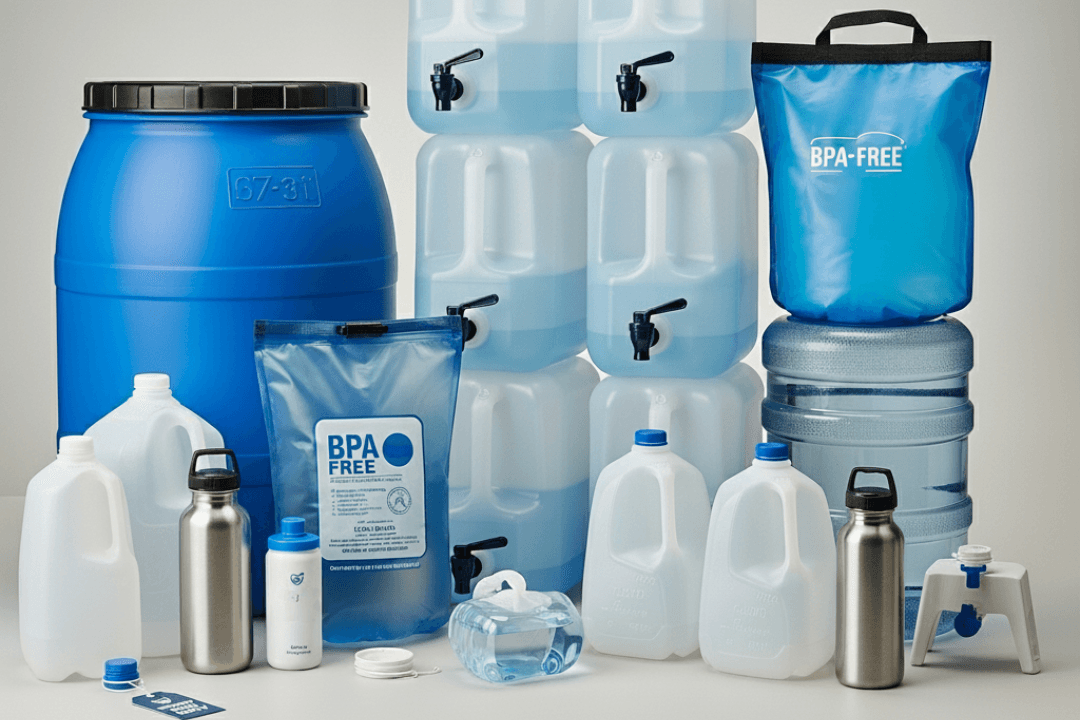
When the water supply stops or becomes unsafe, having water stored at home gives you a reserve to use while you follow official advice. Begin with an amount you can store and manage, then build it up as space and budget allow.
Work out how much to store
The CDC recommends at least 3.8 litres per person per day for three days, with a two-week supply if possible. One US gallon is about 3.8 litres.
For a starting estimate, multiply:
Number of people × number of days × 3.8 litres
For four people, that is about 46 litres for three days or 213 litres for two weeks. Rounded figures make planning easier; they are not a reason to limit someone's drinking water.
This benchmark covers drinking and some other essential uses. It is not a full allowance for normal washing or flushing toilets. Adjust for your household, including pets, illness, pregnancy and hot weather, and follow local advice. If medical treatment depends on water or powered equipment, make a separate plan with your care team.
Choose a storage arrangement you can handle
Water weighs about 1 kg per litre. A 20-litre container holds about 20 kg of water before you count the container itself. Test what you can lift and how you will get water out of it.
Several smaller containers may fit your home better than one large barrel. Keep some portable water available if you may need to evacuate. For a large reserve, check that the floor or shelving can support the load.
Unopened bottled water is a straightforward starting option. Follow its storage instructions and expiry label. If filling containers yourself, choose food-grade containers designed for drinking water and check the manufacturer's suitability and cleaning instructions.
The CDC's safe-storage guidance recommends tightly closed containers that let you pour water without putting hands or objects inside. Never reuse a container that held fuel, pesticides or other toxic chemicals.
Fill containers with safe water
Start with water known to be safe to drink. Check for any current advisory from your water supplier. Do not assume untreated well water is safe.
Wash and rinse the container, then sanitise it using the CDC's complete container-cleaning procedure. Follow the full instructions, including the specified bleach concentration and what to do before filling. Sanitising an empty container and treating drinking water are different procedures.
Fill with safe water, close tightly and label it as drinking water with the filling date. Pour or use a suitable clean dispenser when taking water out; keep hands away from the water and inside surfaces.
Store it where it will stay accessible
Keep water cool and out of direct sunlight, away from fuel and chemicals. Follow the container's instructions and protect it from freezing.
Choose locations with the emergency you are planning for in mind. A basement may be convenient until it floods. Put containers where you can reach them and check them without moving heavy boxes or furniture.
Splitting the reserve between suitable locations can reduce how much becomes inaccessible if one area is damaged. Make sure household members know where it is kept.
Rotate and check the reserve
For water filled at home, the CDC recommends replacement every six months. For commercially bottled water, follow the expiry label instead.
Put the next check on your calendar. Look for leaks or damaged containers, confirm labels are readable and recount the supply after using any. Update the amount when your household's needs change.
Set aside water if its storage conditions are unknown or contamination is suspected. Do not taste it to test it. The CDC explains that normal appearance, smell and taste do not establish safety.
Know the limits of treatment
If an emergency makes tap water unsafe, follow the advisory for your area. An instruction to boil water and an instruction not to use it mean different things.
Boiling and disinfecting do not make water contaminated with fuel or toxic chemicals safe. Use a different safe source and seek official advice. The US EPA's emergency guidance explains these limits.
For germs, boiling or suitable disinfectants may be appropriate. Follow the CDC's complete emergency-treatment instructions and local advice. Elevation matters for boiling; disinfectant type, concentration and contact time matter for chemical treatment. Do not improvise a bleach dose or use scented or additive-containing products unsuitable for drinking-water treatment.
A filter's capabilities depend on the specific product. Check its independently certified claims and maintenance instructions. A taste-improving filter may not remove germs, and filters that remove certain germs may not remove viruses or chemicals. See the CDC's filter-selection guidance.
Treat backup sources as a separate decision
Rainwater, rivers and lakes may contain germs or chemicals. Do not make finding and treating them the basis of your household reserve.
Never drink swimming-pool water or wastewater. Some drinking-water heater tanks may offer an emergency source, but suitability and safe access depend on the system. Radiator and central-heating water must not be used for drinking. Follow the CDC's guidance on emergency sources and local advice rather than improvising.
Keep track with Survivalist
Record your stored water in a cache, with quantities and expiry or rotation dates. If you use an estimated provision-days figure, check that its water allowance matches the needs you have calculated. Update the quantity whenever you use or replace supplies.
Start today: calculate your household's three-day reserve and find a suitable place for the first containers.
Sources
Guidance checked on 7 October 2026. Local water advisories take priority during an emergency.