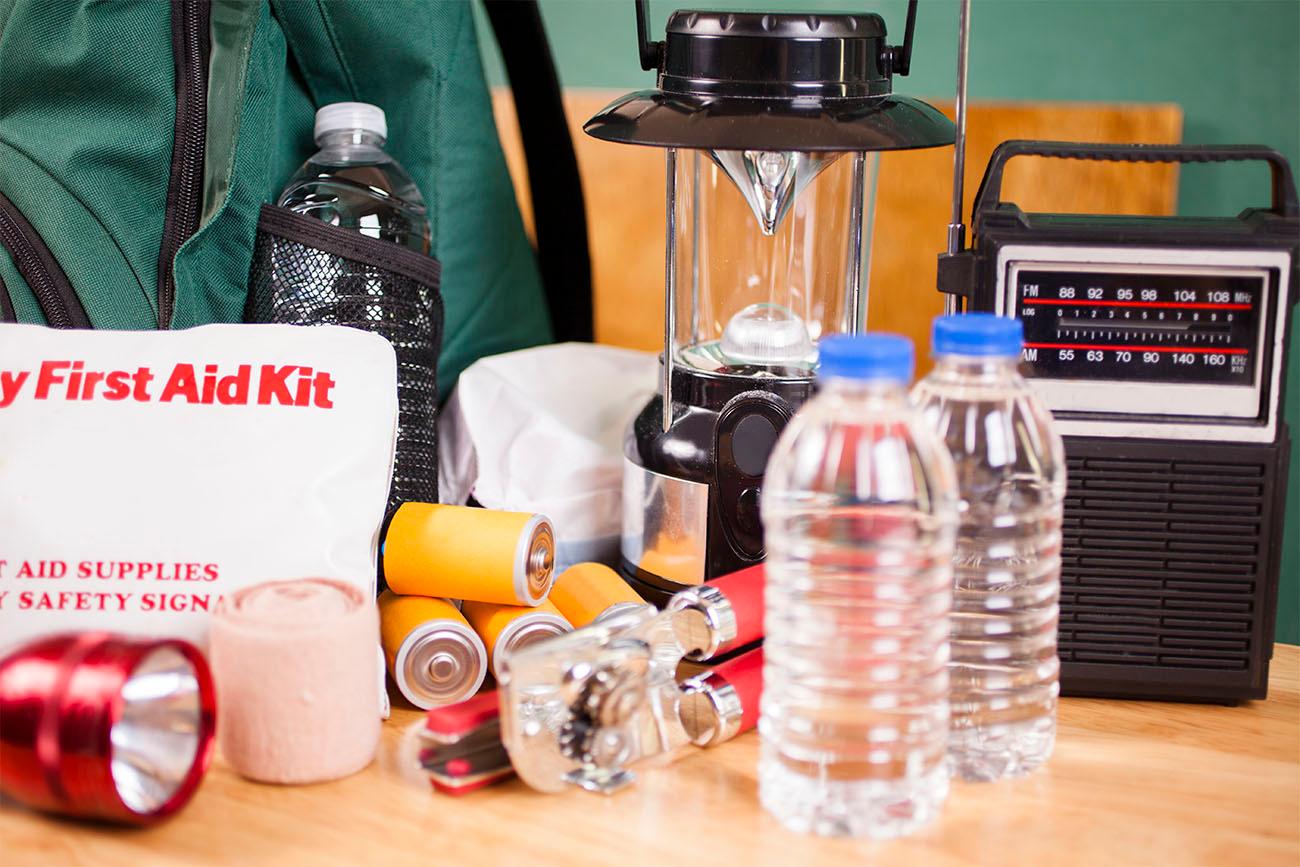
A power cut or water outage can make an ordinary day difficult very quickly. An emergency kit gives you supplies to draw on while you follow local advice and decide what to do next.
Start by looking at what you already have. A cupboard with suitable food, a working torch and some stored water is a useful beginning. You can build from there without buying everything at once.
Decide what your kit needs to do
Think about the disruptions most likely to affect your home. What would you need if the power went off overnight? What if shops were closed or your water supply stopped?
Keep a home reserve for staying put and a portable bag for leaving. They can share some equipment, but they serve different purposes. Our go-bag guide covers what to carry.
The American Red Cross checklist recommends three days of food and water for evacuation and two weeks at home. Build towards what your household can manage, guided by local emergency advice.
Start with water and food
For water, the CDC's starting benchmark is at least 3.8 litres per person per day for three days. That is one US gallon. Allow more where needed, including for hot weather and pets.
For four people, the three-day starting reserve is about 46 litres. The water alone weighs about 46 kg, so choose a storage arrangement you can manage. Our water-storage guide explains containers and maintenance.
Choose food your household already eats that can be stored safely without refrigeration. Include options you can eat without cooking. Read preparation instructions before adding camping meals or other unfamiliar products, and remember a manual can opener for tins.
Work out how many meals the food will provide. A shelf full of snacks may look reassuring without meeting your household's needs.
Add the everyday essentials
The UK government's preparation guidance is a useful starting point for supplies during household disruption. Check these against your own needs:
- A torch or head torch, with suitable spare batteries.
- A charged power bank and the correct phone cables.
- A battery-powered or wind-up radio that receives broadcasts in your area.
- A first-aid kit and the medicines or medical equipment you rely on.
- Hygiene supplies, including soap, hand sanitiser and any menstrual or continence products you use.
- Baby supplies, if needed, with a safe feeding plan for a loss of power or water.
Keep copies of important documents and written contact details where you can find them. Some cash in small denominations can help if electronic payments are unavailable.
Ask your pharmacist or care team about medicine reserves, storage and any equipment that needs electricity. A general checklist cannot settle those needs for you.
Spend on the gaps
Write down what is missing before shopping. Add an extra pack of suitable food to a normal shop, or put money aside for a piece of equipment you need. Buying familiar food makes it easier to use and replace it before it expires.
An existing backpack or storage box may do the job. Test what you own before replacing it, and check that anything bought second-hand is in good working order.
Store supplies where you can reach them
Choose accessible storage suited to the products' labels. Think about what could block access, particularly if part of your home is prone to flooding. Avoid putting all your supplies somewhere you are likely to lose access to during the emergency you are planning for.
Show everyone in the household where the kit is kept. Make sure the people who need it can lift the containers and find essentials in the dark.
Keep it usable
Set a six-month reminder to review the kit, and check sooner when your household's needs change. Look at dates and quantities, test equipment and update contact details. Follow any shorter maintenance interval specified by a product's manufacturer.
As you use an item, put its replacement on your shopping list. A kit is easier to maintain when it fits your normal routine.
Keep track with Survivalist
Create a cache for your home supplies in Survivalist. Record quantities and expiry dates, then use estimated provision days to spot gaps. Check those estimates against your household's actual needs. In-app expiry alerts can help you decide what to use or replace next.
Start today: check what you already have and choose the most useful gap to fill.
Sources
Guidance checked on 7 October 2026. Follow your local emergency authorities for the situation you face.