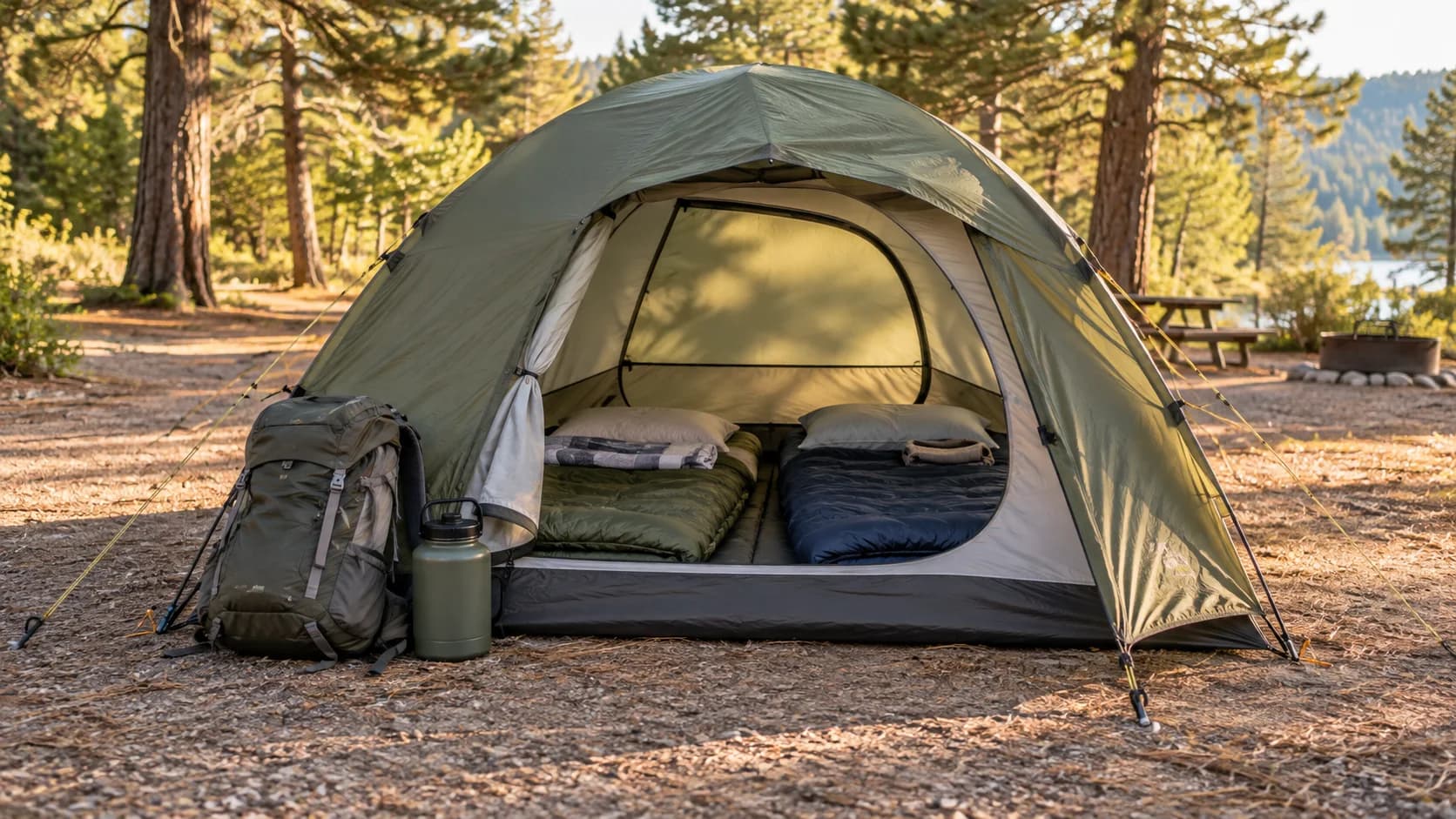
Leaving home during an emergency does not always mean you can return that evening. Your evacuation plan needs somewhere to stay, and a tent may be one of the options you prepare for.
Setting up a campsite involves more than putting up the tent. You need a suitable location, bedding for the conditions and a way to manage water and everyday needs. A practice night at an established campsite can help you find out what works before an emergency.
Decide whether camping is appropriate
Start with the destinations in your evacuation plan. A relative's home, accommodation or an organised emergency shelter may suit your household better than sleeping outdoors. The American Red Cross explains that emergency shelters can offer a place to sleep, food and support. Availability and services depend on the location and event; follow your local authorities for current options.
Consider a tent only where camping is permitted, the site is outside the affected area and conditions are suitable. It should not be your only destination if someone needs support you cannot provide there.
A tent is not a storm shelter. If severe weather is expected, plan for a suitable building or designated shelter. Do not camp in an evacuation zone or return to one to collect equipment.
Practise with the equipment you will take
The National Park Service recommends testing camping equipment before a trip. Put your tent up in calm conditions, check that all parts are present and try packing it away again.
Make sure the people sharing it can fit with the equipment that must stay dry. The tent's advertised sleeping capacity may leave little room for bags. Check how you will transport the full load, especially if walking is part of your evacuation plan.
Prepare bedding for each person. A sleeping mat and sleeping bag suited to the expected temperatures are important parts of the setup, as the National Park Service's equipment guide explains. Include dry sleeping clothes and the lighting you need after dark.
Arrange a trial overnight stay where help and an alternative indoor sleeping place are available. Use it to find practical problems such as a missing peg, a mat that will not hold air or someone who cannot comfortably get in and out of the tent.
Check the location before unloading
An established campsite gives you a place to start asking about conditions and facilities. On arrival, speak to the host or relevant staff about current hazards, weather and site rules. The National Park Service's arrival guidance recommends those checks even on a planned camping trip.
Confirm where to find drinking water, toilets and the exit. Check the route to a suitable severe-weather shelter, and whether everyone can get there promptly. Make sure you can receive updates and tell a trusted contact where you are.
Look at the pitch itself. Avoid ground likely to collect water, flood channels and areas below dead branches or unstable trees. Stay clear of cliff edges and exposed ridges. These are among the hazards identified in the National Park Service's campsite guide.
Do not settle for a poor location because you are tired or have already unloaded. Use your alternative destination if the site or conditions are unsuitable.
Pitch the tent in a clear sequence
Follow the instructions for your particular tent. Designs differ, so practise with the one you own. The National Park Service's setup guide supports these basic steps:
- Check the ground. Use a suitable, reasonably level pitch away from low spots. Remove loose objects that could damage the floor, without disturbing vegetation or altering the site.
- Lay out the footprint, if used. Keep its edges beneath the tent so they do not collect rainwater.
- Assemble the tent as instructed. Fit its poles and outer cover, then secure the pegs and guy lines for the conditions.
- Check access. Keep entrances and paths clear, and make guy lines easy to notice.
- Prepare the sleeping area. Lay out the mats and bedding and keep essentials easy to reach.
Aim to finish while there is daylight. If arriving after dark is a possibility, practise assembling your tent with the lights you intend to carry.
Keep cooking and sleeping separate
Use the site's designated cooking areas and follow its fire restrictions and your equipment's instructions. Plan meals that can be eaten without cooking if using a stove is not allowed or conditions make it unsafe.
Never use a fuel-burning camping stove, barbecue or heater inside the tent, even with the door open. Keep them outside and away from tent entrances. The CDC's carbon-monoxide guidance warns against using portable gas stoves indoors and explains the danger from fuel-burning equipment in enclosed spaces.
Follow the site's food-storage and waste rules, including any wildlife precautions. Do not keep food in the sleeping tent. The National Park Service's guidance for your stay explains how food and rubbish can attract animals.
Keep drinking water ready to use and identify where you can obtain more safely. Our water guide covers the limits of treating an uncertain source. Use the available toilet and washing facilities rather than improvising sanitation beside the tent.
Know when to move
Weather and local conditions can change after you pitch. Keep checking official information and reassess whether the site still suits everyone in your group.
If you hear thunder, move promptly to a substantial enclosed building or a fully enclosed, hard-topped metal vehicle with the windows closed. A tent or open-sided shelter does not protect you from lightning. The National Weather Service recommends waiting at least 30 minutes after the last thunder before returning outdoors. Its vehicle guidance explains the protection provided by the metal shell.
A vehicle used for lightning protection is not a substitute for a designated shelter during every severe-weather event. Follow the advice for the specific hazard. If there is flooding, a fire threat or conditions you cannot manage, follow official directions and use the alternative in your evacuation plan. Be ready to leave without packing if remaining would put you at risk.
Add the overnight stay to your plan
In Survivalist, record your intended destination and alternative, the people who need help, and the actions for arrival. Keep tent and bedding details with your evacuation supplies so you can check the kit before it is needed.
Your go-bag and transport arrangements should reflect the overnight plan. A tent adds weight and space requirements that need testing with the rest of your supplies.
Start today: put up your tent, lay out everyone's bedding and check what the first night would actually require.
Sources
Guidance checked on 10 October 2026. Recreational camping guidance informs the setup advice; emergency authorities determine safe locations and shelter options during an evacuation.
- American Red Cross: emergency shelter options
- National Park Service: preparing for a camping trip
- National Park Service: shelter, bedding and equipment
- National Park Service: checks on arrival
- National Park Service: choosing a site and setting up a tent
- National Park Service: safety during your stay
- CDC: carbon-monoxide safety
- National Weather Service: lightning safety outdoors
- National Weather Service: lightning and vehicles